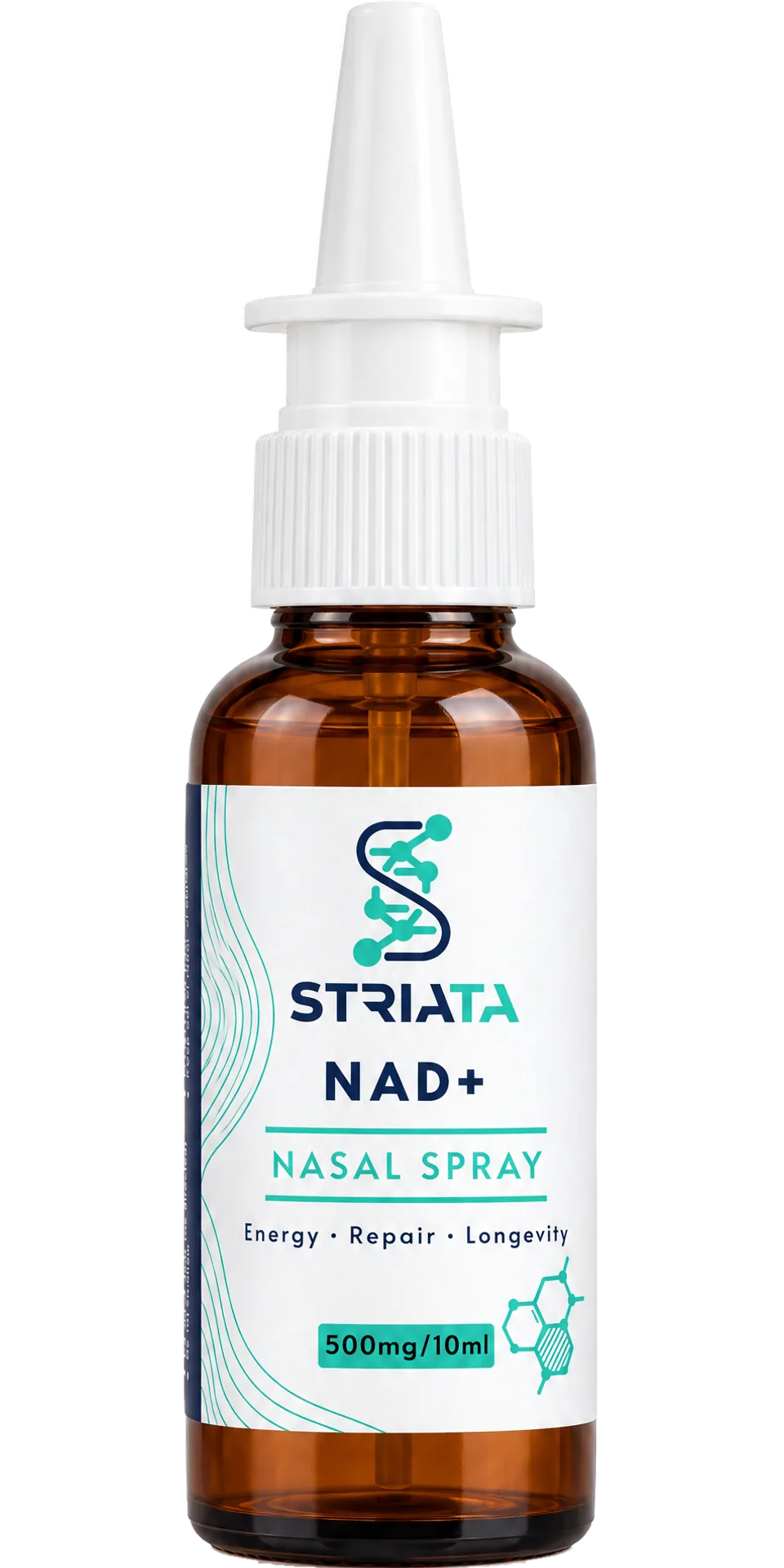
NAD+ Nasal Spray
NAD+ without the IV drip or the oral precursors — 500mg in a nasal spray.
The coenzyme at the centre of cellular energy metabolism and DNA repair, in an intranasal format.
1 bottle
10ml · 500mg
R 460
VAT inclusive · Shipped nationwide from Johannesburg · Research use only
What’s in each spray
The spray arrives already in solution, so the arithmetic is done for you. Figures assume a standard 0.1 mL metered pump.
Per bottle
500mg
in 10ml
Per mL
50mg
concentration
Per spray
5mg
at 0.1 mL a spray
Sprays
~100
per bottle, before priming
Why NAD+ as a nasal spray
NAD+ is usually raised in one of two ways: an IV drip, which is expensive and takes hours, or oral precursors such as NMN and NR, which the body has to convert first. Intranasal delivery is the third option. It is aimed at the brain, and it skips both the clinic and the conversion.
The case for it rests on animal research. In a 2007 rat study, intranasal NAD+ measurably raised NAD+ levels in the brain, and given two hours after a stroke it sharply reduced the resulting brain damage. Nicotinamide, a precursor, given the same way did not.
About NAD+
Nicotinamide adenine dinucleotide (NAD+) is a coenzyme central to cellular energy metabolism, present in every living cell and involved in mitochondrial function and DNA repair pathways. NAD+ levels are well documented to decline with age, which has driven a wave of research interest in restoring them via IV therapy, oral precursors and — as here — intranasal delivery.
Cellular energy production and age-related decline are the two pillars most NAD+ research rests on. Intranasal bioavailability of NAD+ is an active area of research rather than settled science.
Read the full NAD+ compound profileWhat the research covers
Published findings, not promised outcomes. Studies are listed under Sources below.
Reaching the brain
Ying et al. (2007) found intranasal NAD+ significantly increased NAD+ content in rat brains. That is the key point for this format.
Energy metabolism
NAD+ is central to how cells make energy in their mitochondria, and its levels are well documented to fall with age.
DNA repair
NAD+ is used up by the enzymes that repair DNA. That is the link the longevity research draws, and the reason the stroke study worked.
Where the evidence is thin
The strongest intranasal NAD+ evidence is in animals, in a stroke model. How well it is absorbed through the nose in people, and what that does for everyday energy, is an active research question rather than settled science.
Spray, vial or pen
NAD+ comes in all three formats. The compound is the same; what changes is the preparation and how it goes in.
Nasal spray
This pageR 460
10ml · 500mg
- Preparation
- Ready to use
- Delivery
- Intranasal, no needles
Vial
R 400
500mg
- Preparation
- Reconstitute with bacteriostatic water
- Delivery
- Insulin syringe
Using a nasal spray properly
- 1
Prime the pump
Before the first use, pump into the air until a fine, even mist comes out. Those first few sprays are not counted in the bottle total.
- 2
Clear your nose
Blow your nose gently first. A congested nose absorbs poorly and more of the spray runs straight out.
- 3
Aim away from the middle
Tilt your head slightly forward and point the nozzle toward the outer wall of the nostril, not the septum.
- 4
Breathe in gently
Press once while breathing in softly through the nose. A hard sniff pulls the spray down the throat instead of leaving it in the nose.
- 5
Alternate nostrils
Between sprays, alternate nostrils. That spreads the dose over more of the nasal lining.
Storage
Keep the bottle upright with the cap on, and in the fridge once opened. The amber glass protects the solution from light, but not from heat: don’t leave it in a parked car or a sunny window, especially in a South African summer. Don’t freeze it, and don’t share a nozzle between people.
Questions about the NAD+ spray
Order NAD+ Nasal Spray in South Africa
Add it to your order slip and send it when you’re ready. We’ll confirm stock, pricing and delivery on WhatsApp before you pay a cent.
For Research Use Only — not for human consumption.