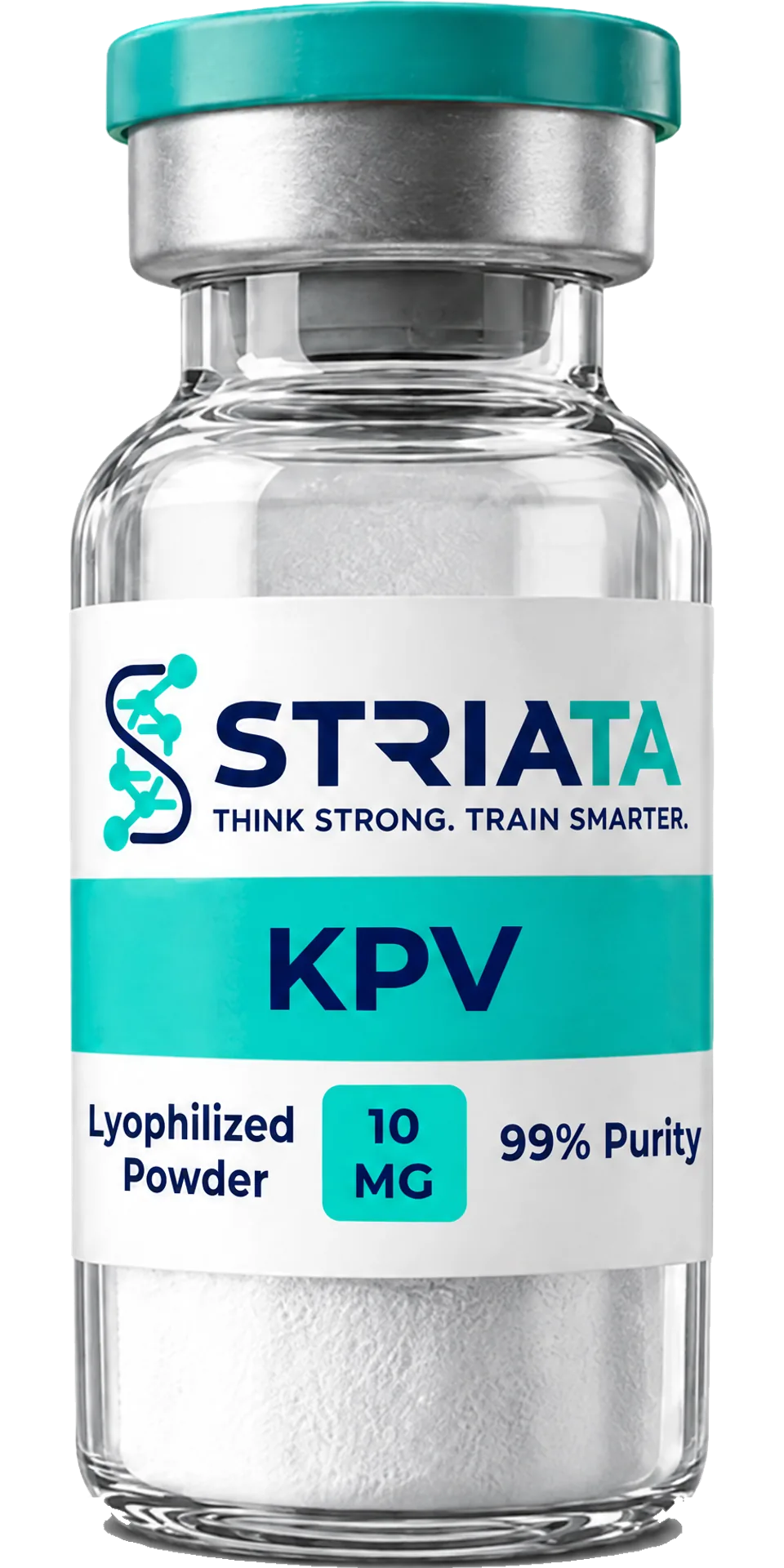
KPV Peptide
A three-amino-acid fragment of alpha-MSH, and one of the few peptides researched as much for the gut as for the skin.
A potent anti-inflammatory tripeptide effective for gut health, skin conditions and systemic inflammation.
- Also known as
- Lys-Pro-Val; alpha-MSH(11-13)
- Class
- Tripeptide fragment of alpha-melanocyte-stimulating hormone
- Evidence
- Animal and cell studies
- FDA
- Not approved
- WADA 2026
- Not named; likely covered by S0 (substances not approved for human use anywhere are prohibited at all times)
Concentrations · 1 vial
from R 35010mg selected — in stock and shipping now.
About KPV
KPV is lysine-proline-valine — the C-terminal tripeptide of alpha-melanocyte-stimulating hormone, and about as small as a peptide gets. What makes it interesting is that it appears to keep the anti-inflammatory action of the parent hormone without the pigmentation effects, which is why it turns up in research on inflammatory bowel conditions and inflammatory skin conditions rather than in tanning protocols.
In practice KPV is bought for one of two reasons: gut symptoms, usually alongside BPC-157, or inflammatory skin conditions, usually alongside GHK-Cu. Both of those combinations exist pre-mixed in the KLOW stack, which is where most people end up if they want all four compounds rather than KPV on its own.
Specifications
Evidence level: Animal and cell studies
- KPV
- Lys-Pro-Val, the C-terminal tripeptide of alpha-MSH (residues 11–13) · C16H30N4O4 · MW 342.4 · CAS 67727-97-3 PubChem ↗
What it’s researched for
Research context, not medical advice. Everything we sell is supplied for research purposes.
Gut inflammation
The largest body of KPV research, and the reason it is most often paired with BPC-157 — the two are studied on different parts of the same problem.
Inflammatory skin
Researched in inflammatory skin conditions, which is what it adds to the GLOW stack to make KLOW.
Systemic inflammation
Studied for a broad anti-inflammatory effect rather than a localised one, which is why it is treated as a base layer in longer protocols.
What the research does not show
The limits of the evidence, stated as plainly as the findings.
- Human trials. The evidence comes from mouse models of colitis and from cell studies.
Reconstitution and storage
The 10mg vial reconstituted with 2 mL of bacteriostatic water gives 5mg/mL. KPV is also one of the peptides sometimes used orally or topically in research contexts; the vial we supply is lyophilised powder for reconstitution. Unopened vials are stable at room temperature in transit but belong in a fridge once they arrive, and out of a parked car in a Highveld summer.
Questions we get about KPV
Sources
- Kannengiesser K, Maaser C, et al. Melanocortin-derived tripeptide KPV has anti-inflammatory potential in murine models of inflammatory bowel disease. Inflammatory Bowel Diseases, 2008.
- Dalmasso G, Charrier-Hisamuddin L, et al. PepT1-mediated tripeptide KPV uptake reduces intestinal inflammation. Gastroenterology, 2008.
- Xiao B, Xu Z, et al. Orally Targeted Delivery of Tripeptide KPV via Hyaluronic Acid-Functionalized Nanoparticles Efficiently Alleviates Ulcerative Colitis. Molecular Therapy, 2017.
Order KPV in South Africa
Everything ships from Johannesburg, nationwide. Add it to your order slip, send the slip on WhatsApp, and we’ll confirm stock, pricing and delivery before you pay a cent.