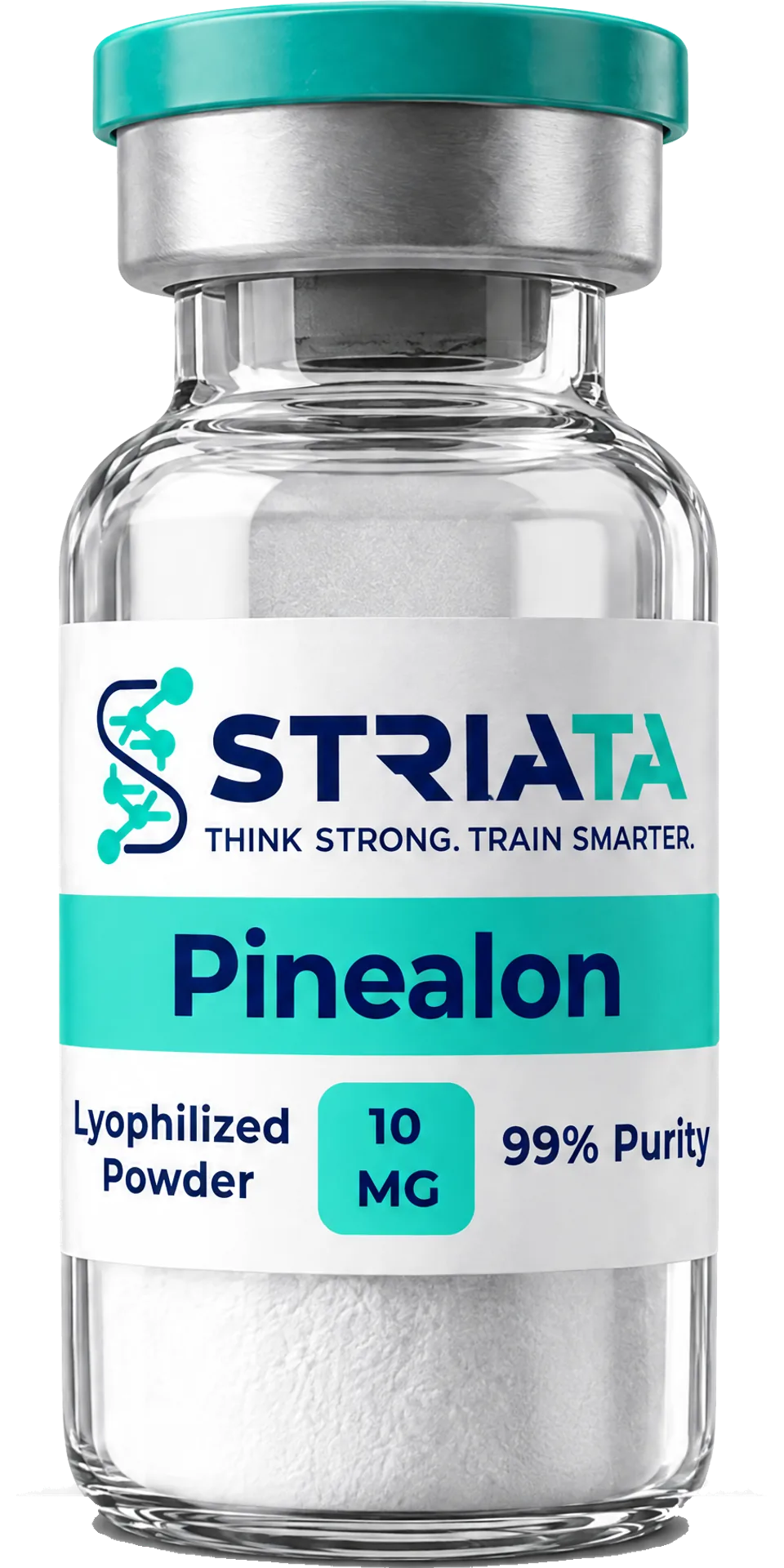
Pinealon
A three-amino-acid bioregulator from the pineal gland, aimed at the brain rather than the clock.
A short bioregulator tripeptide studied in cell and animal models for protecting nerve cells from oxidative stress.
- Also known as
- EDR peptide; Glu-Asp-Arg
- Class
- Short “bioregulator” tripeptide
- Evidence
- Animal and cell studies
- FDA
- Not approved
- WADA 2026
- Not named; likely covered by S0 (substances not approved for human use anywhere are prohibited at all times)
Concentrations · 1 vial
from R 25010mg selected — in stock and shipping now.
About Pinealon
Pinealon is a short peptide bioregulator — part of the same Russian research tradition that produced Epithalon, and derived from the same gland. Where Epithalon's research centres on telomerase and circadian rhythm, Pinealon's centres on the brain: cognitive function, neuroprotection and what the literature calls geroprotection, meaning protection against age-related decline rather than against a specific disease.
Peptide bioregulators are a category with a particular research history: developed in the Soviet Union from the 1970s onward, studied over long timescales, and largely unknown outside that tradition until recently. Pinealon is one of the better-documented members of it, and it is usually run in courses the same way Epithalon is.
Specifications
Evidence level: Animal and cell studies · Mostly from one Russian research group.
- Sequence
- Glu-Asp-Arg (EDR, three amino acids)
- Formula
- C15H26N6O8 PubChem ↗
- Molecular weight
- 418.40 g/mol
- CAS number
- 175175-23-2
What it’s researched for
Research context, not medical advice. Everything we sell is supplied for research purposes.
Cognitive function
The primary research interest, and what distinguishes Pinealon from the other pineal-derived bioregulators.
Neuroprotection
Studied for protection of neurons against oxidative and hypoxic stress, which is the mechanism underlying the geroprotective framing.
Circadian regulation
A secondary interest it shares with Epithalon, consistent with both being pineal peptides.
What the research does not show
The limits of the evidence, stated as plainly as the findings.
- Human trials.
Reconstitution and storage
The 10mg vial with 2 mL of bacteriostatic water gives 5mg/mL. Unopened vials are stable at room temperature in transit but belong in a fridge once they arrive, and out of a parked car in a Highveld summer.
Questions we get about Pinealon
Sources
- Khavinson V, Linkova N, et al. EDR Peptide: Possible Mechanism of Gene Expression and Protein Synthesis Regulation Involved in the Pathogenesis of Alzheimer's Disease. Molecules, 2020.
- Khavinson VKh, Lin'kova NS, et al. Short peptides stimulate serotonin expression in cells of brain cortex. Bulletin of Experimental Biology and Medicine, 2014.
Often bought with it
Order Pinealon in South Africa
Everything ships from Johannesburg, nationwide. Add it to your order slip, send the slip on WhatsApp, and we’ll confirm stock, pricing and delivery before you pay a cent.