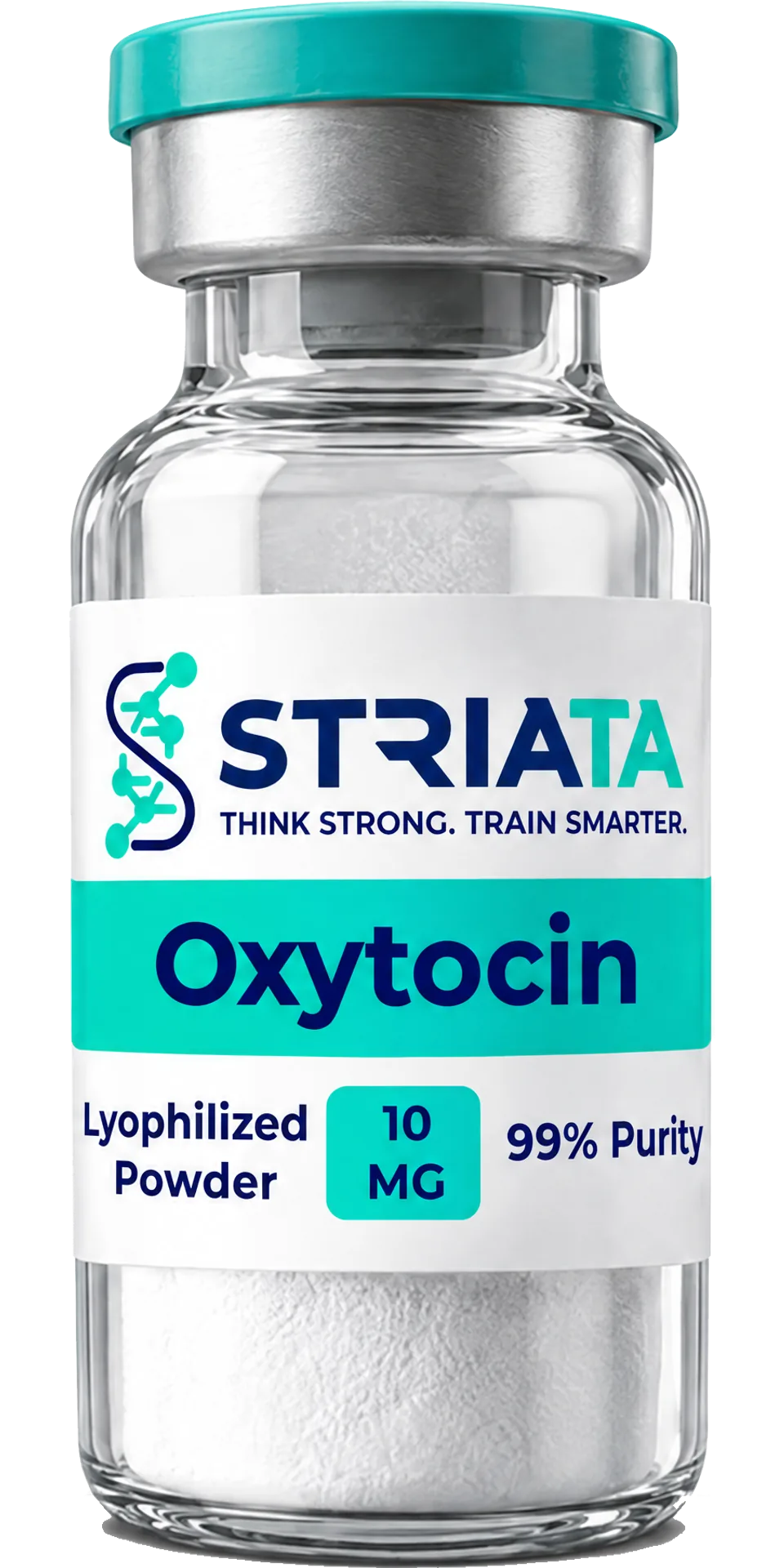
Oxytocin Acetate
The bonding hormone, in a vial — better known for what it does socially than for anything it does in a gym.
The nine-amino-acid hormone approved for use in labour, studied intranasally for social behaviour and stress.
- Also known as
- Pitocin, Syntocinon (brand names of the medicine)
- Class
- Nine-amino-acid neuropeptide hormone
- Evidence
- Approved medicine
- FDA
- Approved for obstetric use
- WADA 2026
- Not named
Concentrations · 1 vial
from R 2255mg selected — in stock and shipping now.
About Oxytocin Acetate
Oxytocin is a nine-amino-acid neuropeptide produced in the hypothalamus, and one of the very few compounds in this catalogue that most people have already heard of. Its reputation rests on childbirth and bonding, which is accurate but narrow: the research interest that brings people to it here is closer to stress, mood and social connection.
It is an unusual product for a peptide catalogue because the reason people buy it is rarely physical. Oxytocin is researched for anxiety, trust and social behaviour far more than for anything in the performance or body composition categories, and it sits alongside Selank and DSIP in most protocols rather than alongside the growth hormone secretagogues.
Specifications
Evidence level: Approved medicine · Approved for use in labour and after birth. The intranasal research is early human studies.
- Structure
- Nine-amino-acid peptide hormone; supplied as the acetate salt
- Formula
- C43H66N12O12S2 (oxytocin) PubChem ↗
- Molecular weight
- 1007.2 g/mol (oxytocin)
- CAS number
- 50-56-6 (oxytocin)
What it’s researched for
Research context, not medical advice. Everything we sell is supplied for research purposes.
Social connection
The research the compound is best known for, covering trust, bonding and social behaviour.
Stress response
Studied for its interaction with cortisol and the stress axis, which is the usual reason it appears alongside anxiolytic peptides like Selank.
Wellbeing
A broad research interest in mood and general wellbeing rather than a specific physical endpoint.
What the research does not show
The limits of the evidence, stated as plainly as the findings.
- Consistent effects from intranasal use. Meta-analyses find small or inconsistent effects on social cognition and in autism.
Reconstitution and storage
The 5mg vial with 2 mL of bacteriostatic water gives 2.5mg/mL. Oxytocin has a half-life of only a few minutes in the blood. Unopened vials are stable at room temperature in transit but belong in a fridge once they arrive, and out of a parked car in a Highveld summer.
Questions we get about Oxytocin Acetate
Sources
- Leng G, Ludwig M. Intranasal Oxytocin: Myths and Delusions. Biological Psychiatry, 2016.
- Lawson EA, Marengi DA, et al. Oxytocin reduces caloric intake in men. Obesity, 2015.
- Keech B, Crowe S, et al. Intranasal oxytocin, social cognition and neurodevelopmental disorders: A meta-analysis. Psychoneuroendocrinology, 2018.
- Huang Y, Huang X, et al. Intranasal oxytocin in the treatment of autism spectrum disorders: A multilevel meta-analysis. Neuroscience and Biobehavioral Reviews, 2021.
Often bought with it
Order Oxytocin Acetate in South Africa
Everything ships from Johannesburg, nationwide. Add it to your order slip, send the slip on WhatsApp, and we’ll confirm stock, pricing and delivery before you pay a cent.